Many homeowners in Tuscarawas County struggle with property tax statements that are confusing and hard to read, leading to overpayments or missed credits. Taxes rise without warning, deadlines are missed, and first-time homeowners often feel overwhelmed by forms and jargon. Understanding which exemptions, credits, and appeal processes apply to your property can prevent unnecessary spending and ensure you only pay what is legally required. This guide breaks down every step from reading your tax bill to applying for exemptions and estimating potential savings for 2026.

Understanding Your Tuscarawas County Tax Statement
Tuscarawas County property tax statements list multiple components including assessed value, local millage rates, and applicable exemptions, which determine the final tax bill. The assessed value represents the county’s estimate of your property’s taxable worth, while the millage rate is the amount per $1,000 of assessed value charged by local entities. Credits and exemptions, such as homestead or veteran reductions, are subtracted after calculations. Understanding each section of your statement allows homeowners to identify errors or missed opportunities for tax relief. Breaking down your statement step by step provides clarity and prevents unexpected charges on your bill.
Available Tuscarawas County Tax Credits and Exemptions
Tuscarawas County offers several local and state-authorized property tax relief programs for eligible homeowners. Seniors and permanently disabled residents may qualify for the Homestead Exemption, which reduces taxable value. Veterans with qualifying service-connected disabilities may receive additional reductions through the Disabled Veterans Exemption. The Owner Occupancy Credit provides a direct 2.5% rollback on the tax bill for primary residences. Income-based relief programs also exist to assist low-income homeowners. Knowing which programs apply to your situation ensures you maximize potential savings while remaining compliant with Ohio law.
Filing Deadlines You Cannot Miss
To secure tax credits or exemptions in Tuscarawas County, applications must be submitted by specified deadlines, typically early in the tax year. Homestead and veteran exemption applications generally must be filed by the first Monday in June, while appeals of assessed value may have different filing windows. Missing these deadlines delays the application of credits until the next tax year, resulting in unnecessary payments. Renewal verification may be required for income-based programs or if eligibility status changes. Keeping a clear calendar of filing dates and setting reminders ensures you never forfeit available savings.
How to Search Tuscarawas County Property Records Online
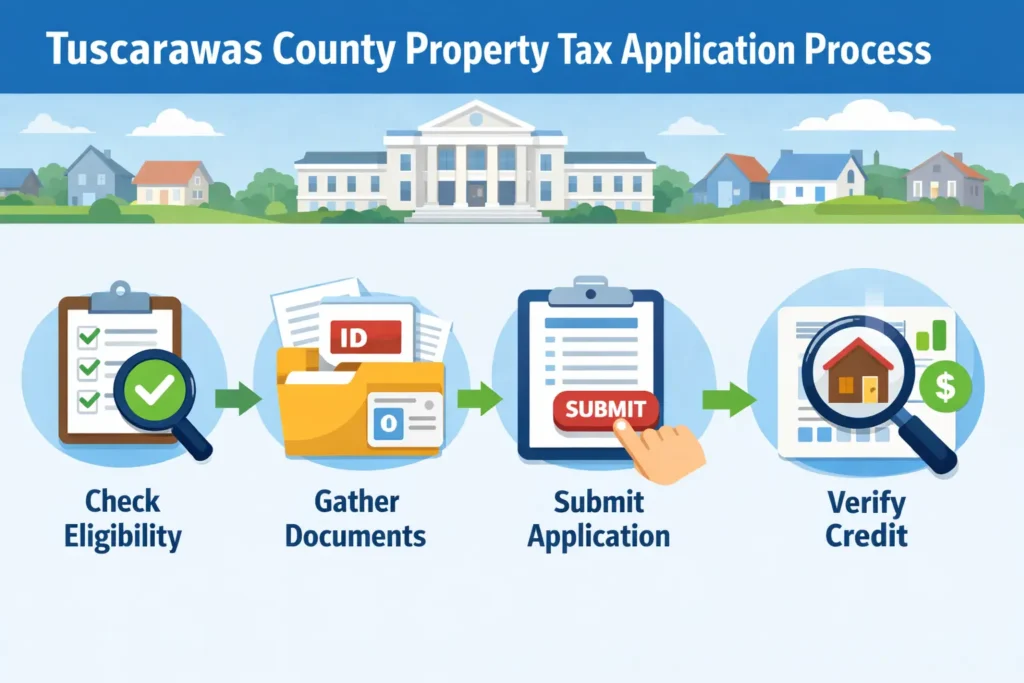
Tuscarawas County property records can be verified online using the Auditor’s property search portal. Enter the parcel number or property address to access ownership history, assessed value, tax statements, and exemption status. The property record card provides detailed breakdowns of local levies, millage rates, and prior assessments. Using this portal helps homeowners confirm whether tax credits have been applied and ensures that all information is up to date. Step-by-step navigation reduces frustration and eliminates the need to visit multiple websites or offices for accurate records.
Understanding Unexpected Tax Increases
Property tax increases in Tuscarawas County often result from rising assessed values, changes in local millage rates, or the introduction of new levies. Even if your property remains unchanged, annual reassessments may increase taxable value. Local school districts, municipal governments, and county services can adjust their levies annually, which contributes to higher bills. Understanding the sources of increases allows homeowners to anticipate changes, calculate potential impacts, and prepare to appeal if valuations seem inaccurate. Transparency in the calculation process prevents surprises and promotes informed financial planning.
Step-by-Step Property Tax Appeal Process
Homeowners who believe their property assessment is too high can file a formal appeal with the Tuscarawas County Board of Revision. The process begins with submitting an application outlining the disagreement, supported by comparable property values, photographs, or recent appraisals. Hearings are scheduled by the board, and decisions are typically rendered within a set timeframe. Appeals can result in reductions to assessed value, lowering the final tax bill. Clear knowledge of required forms, timelines, and evidence prevents delays and increases the likelihood of a successful outcome for property owners seeking relief.
How Property Taxes Fund Local Services
Tuscarawas County property taxes support public schools, infrastructure maintenance, emergency services, and local government operations. While rates may seem high relative to perceived services, tax revenues are distributed across multiple programs and jurisdictions. Comparing Tuscarawas County rates with neighboring counties helps contextualize local obligations and expectations. Homeowners gain perspective on how each levy contributes to specific public functions, which can inform decisions regarding exemptions, appeals, or budgeting for annual payments. Transparency fosters trust and informed civic engagement.
Calculating Potential Savings
Understanding potential savings from exemptions and appeals requires simple calculations based on assessed value and applicable credits. For example, a $150,000 home with a 2.5% Owner Occupancy Credit could see a $3,750 reduction in taxable value, translating to a lower tax bill depending on local millage rates. Income-based relief or veteran exemptions can provide additional savings. Using a tax savings estimator or spreadsheet allows homeowners to compare scenarios and make informed decisions before filing. Accurate calculations prevent overpayment and ensure residents fully leverage available property tax relief programs.
Resources for First-Time Homeowners
First-time homeowners in Tuscarawas County face steep learning curves when navigating property taxes. Familiarity with forms, deadlines, exemptions, and online portals is essential. Key tips include verifying primary residence status, confirming eligibility for homestead or veteran exemptions, and reviewing parcel information regularly. A beginner-friendly approach helps new owners avoid common errors and establishes a routine for managing annual tax obligations. Understanding tax terminology and the interplay between assessed value, millage, and exemptions simplifies decision-making for first-time property owners.
Where to Find Reliable Information
Tuscarawas County provides consolidated information through the Auditor’s official website, treasurer’s office, and assessment office contacts. Accessing official forms, updated 2026 filing dates, and direct phone numbers ensures homeowners use accurate and current resources. Relying on multiple unverified websites can lead to missed credits or misinterpretation of deadlines. Using an all-in-one guide with links to official offices improves efficiency, trust, and compliance with Ohio property tax regulations.
Key Documents Needed for Applications
- Proof of age or disability for senior or Homestead Exemption
- Income verification for means-tested relief programs
- Property ownership evidence, such as deed records
- Veteran documentation for disabled service-connected claims
- Proof of primary residence
Submitting complete documentation reduces processing delays and increases the likelihood that exemptions and credits will be applied correctly for the 2026 tax year.
Table: Tuscarawas County Common Property Tax Credits
| Program | Eligibility | Estimated Savings | How to Apply |
|---|---|---|---|
| Owner Occupancy Credit | Primary residence homeowners | 2.5% reduction on tax bill | Auditor’s Office or online portal |
| Homestead Exemption | Age 65+, permanently disabled | Reduces taxable value | Auditor’s Office |
| Disabled Veterans Exemption | 100% service-connected disability | Larger reduction on taxable value | Auditor’s Office |
| Income-Based Relief | Low-income seniors/disabled | Varies by household income | Auditor’s Office |
Conclusion:
Tuscarawas County property taxes can be confusing, but homeowners can reduce liability by understanding their tax statements, applying for all available exemptions, and filing appeals when necessary. Reviewing assessed values, verifying credits, and meeting all deadlines ensures accurate and fair tax payments. First-time homeowners, seniors, veterans, and low-income residents should consult official Tuscarawas County resources to maximize potential savings. Taking timely action protects your finances and ensures compliance with Ohio property tax regulations.
Frequently Asked Questions
Can multiple exemptions be combined?
Yes, homeowners may qualify for several credits simultaneously if they meet eligibility criteria for each program.
Are property tax statements easy to understand?
They can be confusing, but breaking down assessed value, millage rates, and exemptions clarifies total tax liability.
What happens if I miss a filing deadline?
Exemptions or appeals may be delayed until the following tax year, resulting in lost savings.
How do I verify property records online?
Use the Tuscarawas County Auditor parcel search tool, entering parcel number or property address to review detailed property information.
Can I appeal my property assessment?
Yes, submit an appeal to the Board of Revision with supporting evidence to potentially lower your assessed value.
Do first-time homeowners get extra guidance?
The Auditor’s Office provides resources, online forms, and contact information to help first-time homeowners navigate taxes effectively.