
If you live in Tuscarawas County, there’s a good chance your 2026 property tax bill didn’t feel quite right. Maybe it wasn’t dramatically higher but enough to make you pause. Enough to compare it with last year. Enough to ask:
“Why did this go up when nothing really changed?”
That reaction is more common than you might think right now. Across Tuscarawas County, many homeowners are seeing similar increases even those who haven’t renovated, sold or made any major changes to their homes.
That’s where most homeowners get confused. Because the truth is, property taxes don’t just respond to what you do. They respond to what’s happening around you in your neighborhood, in the housing market and inside the county’s valuation system.
In many cases, the increase isn’t a mistake.
But that doesn’t automatically mean it’s correct either. Here’s what’s actually driving the change and what you can do about it.
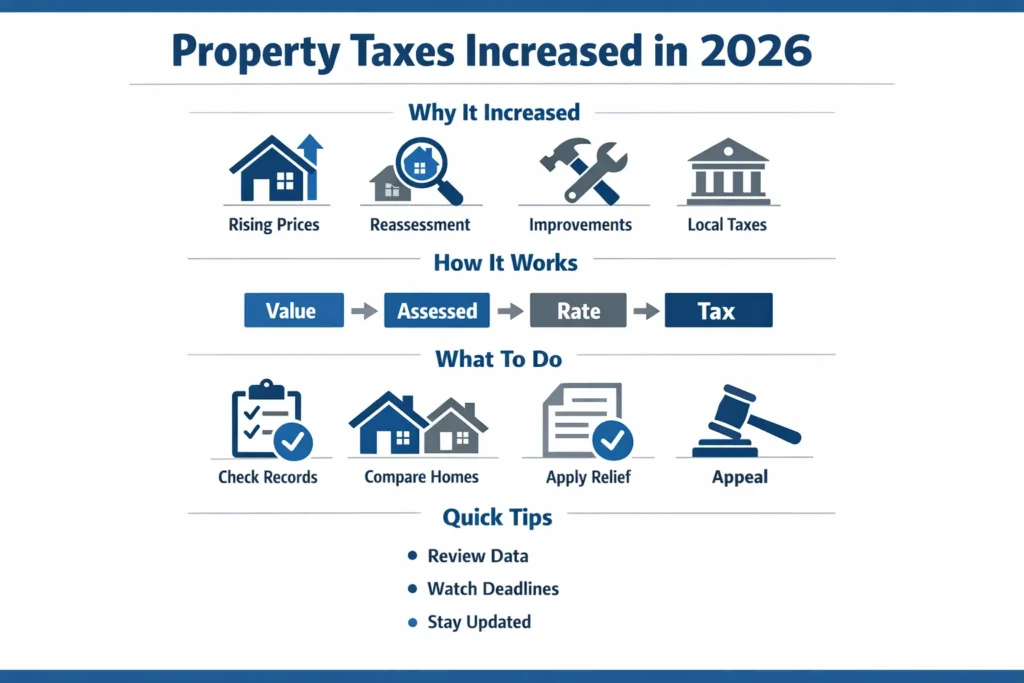
What Actually Changed in 2026?
Property taxes are tied closely to your property’s assessed value and that value doesn’t stay frozen forever. In Tuscarawas County, properties are reviewed on a cycle. Every few years, the county updates values to reflect what homes are currently selling for in the real world.
2026 is one of those update periods for many areas. So even if your house hasn’t changed, the market around it probably has. If nearby homes are selling at higher prices than before, the county uses that data to reassess what your property is worth today not what it was worth a few years ago.
That updated value becomes part of the equation that determines your tax bill. And over the past couple of years, housing prices in many parts of Ohio have quietly moved upward sometimes more than homeowners expected.
According to recent valuation updates in Tuscarawas County, many residential properties were adjusted to reflect current market trends and recent home sales across the area. These updates are part of the county’s regular effort to keep property values aligned with real-world conditions
The Real Reasons Your Property Taxes Went Up
When you look closely, it’s usually not just one reason. It’s a combination of small shifts that build into a noticeable increase. Property assessments and tax rates are managed through official Tuscarawas County government records and periodic reassessment cycles.
Rising Sale Prices in Your Area
Let’s say a home down your street sold for $220,000 two years ago. Now, similar homes are selling closer to $260,000.
Even if your home hasn’t changed at all, it now sits in a higher-value neighborhood. The county sees that and adjusts accordingly. This is one of the biggest drivers behind recent increases.
County Reassessment Cycle
Tuscarawas County follows a structured reassessment schedule. This isn’t random or targeted it’s applied across groups of properties at specific intervals.
When your area comes up in that cycle, values are reviewed and updated using the latest available data.
So if your property value changed in 2026, it’s likely part of this broader update rather than something specific to your home alone.
Property Improvements (Even Small Ones)
Not every change feels like a big upgrade. But over time, small improvements can add value:
- finishing a basement
- updating a kitchen or bathroom
- adding a garage or deck
- structural or exterior improvements
Individually, they might not seem like much. But combined with a rising market, they can influence how your property is assessed.
Local Levies and School Funding
This is where many homeowners get caught off guard. Your tax bill isn’t just about your home’s value, it also depends on local tax rates.
If a school levy was approved or a local tax rate changed, your bill could increase even if your property value stayed the same.
And because these changes happen at the community level, they’re easy to miss unless you’re actively looking for them.
Why It Feels Confusing (And Sometimes Unfair)
One of the biggest misconceptions is that property value and property taxes move in a simple, direct line. They don’t.
There are multiple layers involved:
- market value (what your home could sell for)
- assessed value (what the county calculates)
- taxable value (what your taxes are based on)
- local tax rates (which can change independently)
So yes, a higher value often leads to higher taxes but not always in a perfectly predictable way. That’s why two similar homes can end up with different tax bills and it’s important to double-check instead of assuming everything is correct.
For a broader overview of how property assessments and taxes work in the area, you can also explore the main Tuscarawas County Auditor guide on this site
A Simple Example to Put It in Perspective
Here’s a quick comparison to make things clearer:
| Scenario | Last Year | 2026 Update |
|---|---|---|
| Market Value | $220,000 | $260,000 |
| Assessed Value | Lower | Increased |
| Tax Rate | Same | Slightly Higher (levy impact) |
| Final Tax Bill | Lower | Noticeably Higher |
Even though nothing changed inside the home, the surrounding market + updated assessment + possible levy adjustments all contributed to a higher bill.
What You Can Do About It (Practical Steps That Actually Help)
Once you understand what caused the increase, the next step is figuring out whether you need to take action. Because not every increase is something you just have to accept.
Start With Your Property Details
Before anything else, take a few minutes to review how your property is recorded.
Look for things like:
- incorrect square footage
- features that don’t exist
- outdated improvements
- classification errors
Even small inaccuracies can affect your assessed value more than you’d expect. To verify your property details, you can use the Tuscarawas County property search tool, which allows you to review ownership records, assessed values, and property characteristics in one place.
Use the Property Search Tool to Double-Check
Most homeowners don’t realize how much information is publicly available. You can review your property’s details, past values, and comparisons using the county’s property search system.
It’s one of the easiest ways to catch inconsistencies early and it gives you a clearer picture of how your property is being evaluated.
Consider Filing an Appeal (If Something Feels Off)
If your property seems overvalued compared to similar homes, you have the right to challenge it.
But here’s the key: appeals are based on evidence, not opinion. Strong examples include:
- recent sales of similar homes
- photos showing condition differences
- documentation of issues affecting value
Timing matters here. Missing the deadline can limit your options for the entire year.
Check If You Qualify for Any Reductions
There are programs that can reduce your taxable value, but many homeowners never apply simply because they don’t know they exist.
Depending on your situation, you may qualify for:
- homestead-related reductions
- owner-occupancy credits
- other local exemptions
Even a modest reduction can make a meaningful difference over time.
Common Mistakes Homeowners Make
This is where small oversights can turn into long-term costs. Some people ignore the increase completely, assuming it’s fixed and unchangeable.
Others wait too long to act and miss important deadlines and then there are those who file appeals without enough supporting evidence which usually leads to rejection. The most avoidable mistake, though, is not checking your property record at all.
A Quick Checklist You Can Follow
If you’re not sure where to start, this simple checklist can help you stay on track:
✔ Review your property details for accuracy
✔ Compare your home with similar properties nearby
✔ Check if your assessed value feels reasonable
✔ Look into available exemptions or credits
✔ Decide whether an appeal is worth it
✔ Keep track of deadlines so you don’t miss your window
You don’t have to do everything at once but even a few of these steps can give you more control over the situation.
A Smarter Way to Stay Ahead in the Future
Property taxes aren’t something most people think about until the bill arrives. But checking your property details once or twice a year can prevent surprises.
It also helps you notice trends whether your value is gradually increasing or if something changed suddenly. That kind of awareness makes it much easier to act early instead of reacting later.
If you want a step-by-step breakdown of how property taxes are calculated and paid, you can refer to the Tuscarawas County property tax guide available here.
Final Thoughts
A higher property tax bill can feel frustrating especially when it seems like it came out of nowhere. But once you understand how many moving parts are involved, it starts to make more sense.
The market shifts. The county updates values. Local rates change. And all of it comes together in that one number you see on your bill.
The important thing is not to ignore it. Take a closer look. Ask questions. Compare your property. And if something doesn’t seem right, take the steps available to you. You can’t control market changes but you can verify whether your assessment is accurate
Keep in mind that property tax situations can vary from one property to another, so reviewing your own records regularly can help you avoid surprises.
FAQ’S
Why did my property taxes increase in Tuscarawas County in 2026?
Property taxes often increase because of updated property assessments, changes in local market values, or adjustments in tax rates. In 2026, many homes in Tuscarawas County were reassessed based on current market conditions, which led to higher tax bills for some homeowners even if they didn’t make any changes to their property.
Does a higher property value always mean higher taxes?
Not always. Property taxes depend on both your assessed value and the local tax rate. If your property value increases but tax rates remain the same, your bill may go up. However, exemptions or credits can sometimes reduce or balance the increase.
Can I challenge or appeal my property tax increase?
Yes, homeowners can challenge their property valuation if they believe it is incorrect. The process usually requires proof such as recent comparable home sales, property condition details, or valuation differences. If your appeal is accepted, your assessed value and tax amount may be reduced.
What is the difference between market value and assessed value?
Market value is the estimated price your home could sell for in the current real estate market. Assessed value is the value used by the county to calculate your property taxes. Both are related, but they are not always the same.
Can property taxes decrease in the future?
Yes, property taxes can go down if home values in the area drop or if local tax rates are reduced. However, in most cases, taxes remain stable or gradually increase depending on market trends and community funding needs.
How can I check if my property information is correct?
You can review your property details through the county property search system. This helps you verify ownership records, assessed value, and property characteristics. If you notice any errors, you can request corrections through the official county process.